
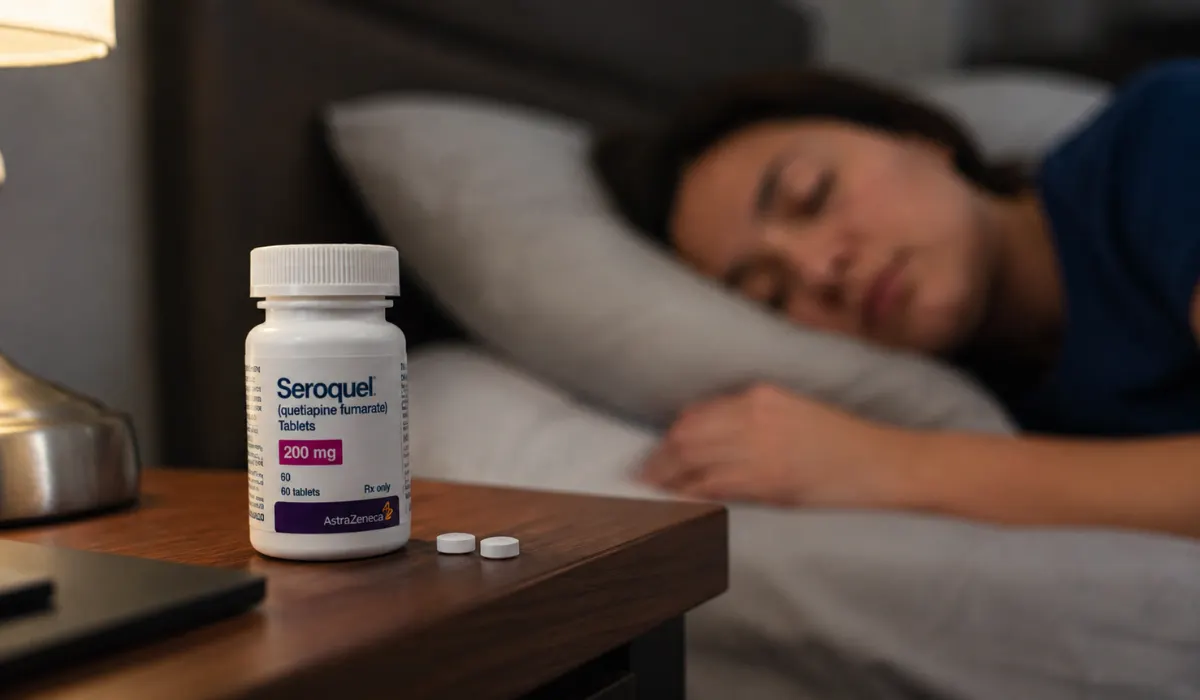
Many people struggle with insomnia, whether it’s trouble falling asleep, staying asleep, or feeling rested. In search of relief, some turn to medications like Seroquel (Quetiapine).
While it’s an atypical antipsychotic primarily prescribed for bipolar disorder and schizophrenia, its sedating properties have led to occasional off-label use for sleep.
However, this use is controversial, and understanding the risks, benefits, and alternatives is essential before considering it as a sleep aid.
What Is Seroquel?
Seroquel, also known by its generic name quetiapine, is an atypical antipsychotic medication primarily prescribed to manage mental health conditions such as schizophrenia, bipolar disorder, and major depressive disorder.
It works by influencing certain chemicals in the brain, mainly dopamine and serotonin, which play key roles in regulating mood, thought processes, and behavior.
Although Seroquel is not officially approved to treat sleep problems, it is sometimes prescribed off-label in low doses to help with insomnia or difficulty falling asleep. This is largely due to one of its side effects: drowsiness which can make it easier for some individuals to fall asleep.
Seroquel is available in immediate-release (IR) and extended-release (XR) tablet forms, giving healthcare providers flexibility in dosing based on individual needs. It’s important to note that using Seroquel for sleep is considered off-label, meaning the FDA has not approved it specifically for insomnia.
As a result, potential benefits must be weighed carefully against known risks and side effects, which can include weight gain, elevated blood sugar, and changes in blood pressure, even at lower doses.
Can Seroquel Be Used For Sleep?
Seroquel is sometimes prescribed off-label for sleep issues, especially in cases where individuals have difficulty falling asleep or staying asleep. Its sedative effect, which is a side effect of its action on histamine receptors in the brain, can make some people feel drowsy, helping them initiate sleep.
However, it is important to understand that Seroquel is not FDA-approved for insomnia. While low doses (typically 25 mg to 100 mg) may be used in certain circumstances, clinical evidence supporting its effectiveness for primary sleep disorders is limited.
This means doctors usually weigh the potential benefits against the known risks, such as weight gain, elevated blood sugar, and metabolic changes.
Seroquel may be more appropriate for individuals whose sleep problems are related to underlying psychiatric conditions, such as bipolar disorder or schizophrenia, rather than for people with primary insomnia.
In these cases, it can help improve sleep indirectly by reducing symptoms like anxiety, racing thoughts, or agitation that interfere with rest.
Because of the potential for side effects and the lack of strong evidence for treating sleep alone, healthcare professionals typically recommend exploring safer, evidence-based sleep aids or behavioral strategies before considering Seroquel for insomnia.
How Seroquel Works For Sleep?
Seroquel (quetiapine) is an atypical antipsychotic that can cause drowsiness due to its effect on neurotransmitters like dopamine, serotonin, and histamine. Its action on histamine receptors promotes sleepiness, helping users fall asleep more easily.
At low doses, Seroquel can calm racing thoughts and anxiety, which often interfere with sleep. For individuals with mental health conditions such as bipolar disorder or schizophrenia, this can indirectly improve sleep quality.
However, Seroquel does not directly regulate the sleep cycle like traditional sleep aids. Its sedative effect is secondary, meaning it may help you feel sleepy but not guarantee deep, restorative sleep.
For this reason, healthcare providers use it cautiously and typically only when sleep issues are linked to underlying psychiatric symptoms.
Dosage And Administration
When Seroquel (quetiapine) is prescribed for sleep, it is typically at low doses, often ranging from 25 mg to 100 mg per night. These doses are much lower than those used to treat psychiatric conditions like bipolar disorder or schizophrenia.
Seroquel is taken orally, usually as a tablet. It should be taken shortly before bedtime to take advantage of its sedative effects. The exact dose and timing should always be determined by a healthcare provider, who will consider your medical history, other medications, and overall health.
Because Seroquel can cause next-day drowsiness, it’s important to avoid driving, operating heavy machinery, or engaging in tasks that require full alertness after taking it. Consistency in timing and dosage helps maintain effectiveness and reduce side effects.
Patients should never adjust their dose without medical guidance, and abrupt discontinuation should be avoided to prevent potential withdrawal symptoms.
Precautions Before Taking Seroquel
Before using Seroquel for sleep, it’s important to understand potential risks and interactions. Individuals with heart conditions, high or low blood pressure, or a history of stroke or heart disease should consult a healthcare provider before use. Seroquel can sometimes affect cardiovascular function and metabolism.
People with diabetes or high blood sugar should be cautious, as Seroquel may increase blood glucose levels. It can also interact with medications such as anticonvulsants, blood pressure drugs, or alcohol, potentially intensifying drowsiness or other side effects.
Older adults may be more sensitive to sedation and blood pressure changes, increasing the risk of falls. Pregnant or breastfeeding individuals should avoid Seroquel unless specifically directed by a doctor.
It’s essential to follow prescribed dosing closely and avoid sudden discontinuation, as stopping abruptly can lead to withdrawal symptoms. Discuss all medical conditions, medications, and supplements with a healthcare provider before starting Seroquel to ensure safety and effectiveness.
Alternatives To Seroquel For Sleep
If you’re seeking sleep support without the risks associated with Seroquel, there are several alternatives, both non-medication and prescription-based.
Non-medication options are often recommended first, including cognitive behavioral therapy for insomnia (CBT-I), which helps address the root causes of sleep issues through behavioral changes and sleep hygiene practices.
Over-the-counter options include antihistamines like diphenhydramine or doxylamine, which can provide short-term relief for occasional sleeplessness. Melatonin supplements may also help regulate the sleep-wake cycle, particularly for circadian rhythm disruptions, though they are generally less effective for chronic insomnia.
For more persistent cases, prescription medications can be considered under medical guidance. This may include Z-drugs like zolpidem (Ambien) or eszopiclone (Lunesta), which are designed specifically for sleep, as well as low-dose antidepressants like trazodone or doxepin, which are sometimes used off-label for insomnia.
Choosing the right alternative depends on your specific sleep challenges, underlying health conditions, and a discussion with your healthcare provider about safety, effectiveness, and potential side effects.
Side Effects Of Seroquel For Sleep
Seroquel can cause drowsiness, dizziness, and dry mouth. Long-term or off-label use may lead to weight gain, increased blood sugar, or changes in cholesterol.
Older adults are at higher risk of falls due to blood pressure drops and should use caution. Other possible effects include restless legs, mild swelling, or gastrointestinal discomfort.
Because of these risks, Seroquel should only be used under medical supervision, ideally short-term or when benefits outweigh potential harms.
Bottom Line
Seroquel is primarily an antipsychotic medication that can cause drowsiness, which has led some to use it off-label for sleep. While it may help certain individuals fall asleep, particularly those with underlying mental health conditions, there is limited evidence supporting its safety or effectiveness for primary insomnia.
Potential risks, including weight gain, blood sugar changes, and cardiovascular issues, often outweigh the benefits for most users. Non-medication strategies and alternative sleep aids are generally safer and more appropriate for managing short-term or chronic sleep difficulties.
Always consult a healthcare professional before using Seroquel for sleep to determine if it’s appropriate for your situation.
Frequently Asked Questions
Seroquel is not FDA-approved for insomnia. Its use for sleep is off-label and may pose risks like weight gain, blood sugar changes, and cardiovascular effects.
Low doses (typically 25-100 mg) are sometimes used off-label. Dosage should always be determined by a healthcare professional based on individual needs and health conditions.
No. It’s generally not recommended for older adults, people with metabolic or cardiovascular issues, or those without an underlying mental health condition affecting sleep.
Drowsiness can begin within 30-60 minutes. Effects vary based on dose, metabolism, and whether the tablet is immediate- or extended-release.
Yes. Non-medication approaches like improving sleep hygiene or cognitive behavioral therapy, as well as OTC options like melatonin, are generally safer for primary insomnia.
Yes. Blood pressure medications, certain antiepileptics, and alcohol may interact with Seroquel. Always consult a healthcare provider before combining it with other substances.
References
- MedlinePlus – Quetiapine
https://medlineplus.gov/druginfo/meds/a698019.html - U.S. Food and Drug Administration – Seroquel Prescribing Information
https://www.accessdata.fda.gov/drugsatfda_docs/label/2019/020639s072lbl.pdf - Mayo Clinic – Quetiapine (Seroquel) Overview
https://www.mayoclinic.org/drugs-supplements/quetiapine-oral-route/description/drg-20069711 - National Center for Biotechnology Information – Quetiapine Pharmacology
https://www.ncbi.nlm.nih.gov/books/NBK519047/ - PubMed – Safety and Efficacy of Quetiapine for Off-Label Uses
https://pubmed.ncbi.nlm.nih.gov/27604786/