Over-the-counter medicines are part of everyday life for many families. People use them for headaches, fever, cough, cold symptoms, allergies, stomach upset, muscle pain, and minor discomfort. Because these medicines are easy to buy without a prescription, it can be easy to forget that they still need careful use.
Good medicine habits can help prevent wrong doses, side effects, allergic reactions, and unsafe medicine combinations. The FDA explains that OTC medicines are generally safe and effective when people follow the label directions and use them as advised by a healthcare professional.
Read the Medicine Label Before Every Use
The label is the most important safety guide on any OTC medicine. It tells you the active ingredient, purpose, uses, warnings, dose, directions, and storage instructions. Even if you have used the product before, read the label again because formulas, strengths, or directions can change.
Pay special attention to the “active ingredient” section. Many cold, flu, pain, and sleep products may contain the same ingredient under different brand names. Taking two products with the same active ingredient can lead to accidental overdose, especially with common ingredients like acetaminophen.
Follow the Correct Dose and Timing
Taking more medicine does not mean faster relief. It can increase the risk of side effects or serious harm. Always follow the recommended dose, waiting time between doses, and maximum daily limit listed on the package.
For liquid medicines, use the dosing cup, syringe, or spoon that comes with the product. The CDC advises using the included dosing device for children and not giving more medicine than the package states. Kitchen spoons are not accurate and can lead to too much or too little medicine.
Be Careful With Children’s Medicines
Children are not small adults, so their medicine doses should not be guessed. Always check the age and weight directions before giving any OTC medicine to a child. Some medicines are not suitable for infants or young children.
MedlinePlus advises extra care when giving medicine to children and recommends using a proper measuring spoon or dosing cup instead of a kitchen spoon. When unsure, ask a pediatrician or pharmacist before giving the medicine.
Avoid Mixing Medicines Without Advice
Many people take OTC medicine along with prescription drugs, vitamins, or supplements. This can sometimes cause interactions. For example, some allergy medicines may cause drowsiness, while some pain relievers may not be suitable for people with stomach, kidney, heart, or blood pressure concerns.
Before mixing medicines, check with a pharmacist or doctor. This is especially important for older adults, pregnant people, people with chronic health conditions, and anyone taking daily prescription medicine.
Store Medicines Safely at Home
Medicine should be stored in a cool, dry place unless the label gives different instructions. Avoid keeping medicine in places with heat, moisture, or direct sunlight, such as bathrooms or near kitchen stoves.
Keep all medicines out of reach and sight of children and pets. Use child-resistant caps correctly after every use. Safe storage is one of the easiest ways to prevent accidental poisoning or misuse at home.
Check Expiry Dates and Package Condition
Do not use expired medicine unless a healthcare professional specifically advises otherwise. Expired products may not work as expected, and some may become unsafe depending on the ingredient and storage condition.
Also check the package before use. Do not use medicine if the seal is broken, the color or smell has changed, the tablets are damaged, or the liquid looks unusual. These signs may mean the product is no longer safe to take.
Know When OTC Medicine Is Not Enough
OTC medicine may help with mild, short-term symptoms, but it should not replace medical care when symptoms are serious or ongoing. Get medical advice if pain, fever, cough, stomach problems, or allergy symptoms do not improve within the recommended time on the label.
Seek urgent care for severe allergic reactions, trouble breathing, chest pain, confusion, uncontrolled vomiting, signs of overdose, or symptoms that suddenly become worse. Medicine safety also means knowing when self-care is no longer the right choice.
Talk to a Pharmacist for Safer Choices
Pharmacists can help you choose the right OTC medicine based on your age, symptoms, health history, and current medications. This is useful when two products look similar or when you are unsure which ingredient is best.
You should also ask questions if the label is confusing. The CDC recommends talking to a pharmacist or doctor before taking medicine if you do not understand the label instructions. A quick question can prevent a serious mistake.
Trustworthy Medicine Habits Matter
This article is written for general health education and is based on safety guidance from reliable public health sources, including the FDA, CDC, and MedlinePlus. It is not a replacement for advice from a doctor, pharmacist, or licensed healthcare provider.
For the safest results, always follow the product label, use the correct dose, avoid unnecessary medicine combinations, and ask a healthcare professional when you are unsure. Personal factors such as age, pregnancy, allergies, liver health, kidney health, and prescription medicines can change what is safe for you.
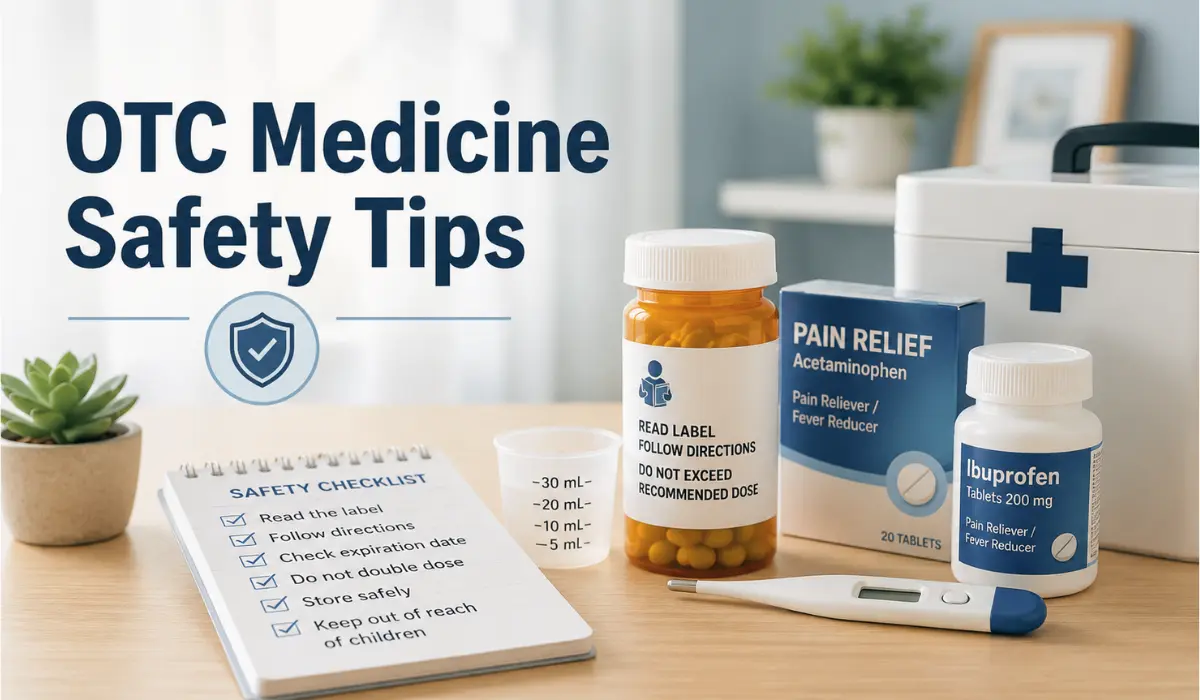
Practical OTC Medicine Safety Checklist
Before taking any OTC medicine, check the active ingredient, correct dose, timing, warnings, expiry date, and storage instructions. Do not take multiple medicines for the same symptom unless you know they are safe together.
Keep a simple list of medicines you use, including prescriptions, OTC products, vitamins, and supplements. Bring this list when visiting a doctor or pharmacist. It helps them spot possible interactions and guide you better.
Frequently Asked Questions
Sometimes yes, but not always. Check the active ingredients first because two different products may contain the same medicine. Ask a pharmacist if unsure.
No, not unless a doctor says so. Children need age- or weight-based dosing, and some adult medicines may be unsafe for them.
Contact poison control, a doctor, or emergency care right away. Do not wait for symptoms, because some overdoses can become serious later.
For short-term symptom relief, you can usually stop when symptoms improve. Follow the label, and do not keep taking medicine longer than recommended.